 TV's Deck Co.
Why Grand Strand homeowners choose composite
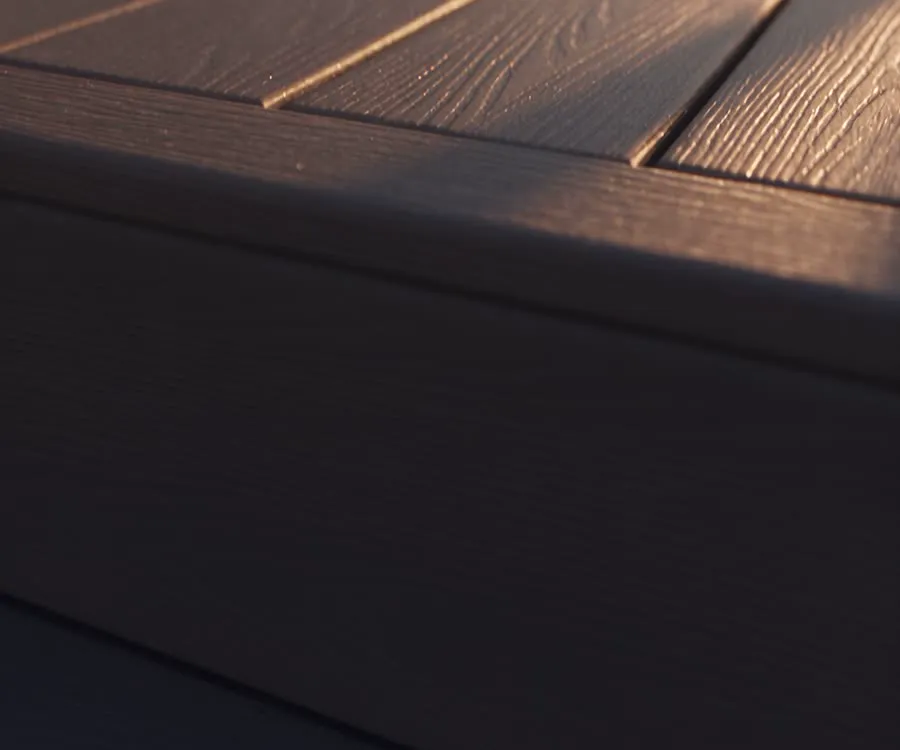
Decks here take a beating: long summers of direct sun, heavy humidity, afternoon storms, and salt air if you're anywhere near the water. Composite boards are made to handle that without the sanding, staining and sealing a wood deck needs.
- No staining or sealing. An occasional wash is usually all it needs.
- No splinters. Easier on bare feet coming back from the beach.
- Resists rot and insects that go after wood in our humid climate.
- Holds its color far longer than bare wood, which grays in the sun.
- Lots of colors and wood-grain finishes to match your house.
The honest trade-offs
Composite costs more up front than pressure-treated wood, and darker colors can get hot in full afternoon sun. At your estimate, we'll show you what the price difference looks like for your deck and help you pick a color that suits how much sun your yard gets.
Composite vs. pressure-treated wood
| Composite | Pressure-treated wood | |
|---|---|---|
| Up-front cost | Higher | Lower |
| Upkeep | Occasional wash | Clean and re-seal or stain every year or two |
| Splinters | No | Can splinter as it ages |
| Look over time | Holds its color | Grays and weathers without sealing |
| Best for | Set it and forget it | Lowest cost to get outside |
Not sure which is right? We build both. See pressure-treated wood decks.
What's under the boards matters too
A composite deck is only as good as the frame it sits on. We build the framing, footings, stairs and railings to fit your house and your yard, and we'll walk you through the hardware and details that hold up near the coast.
Last updated